
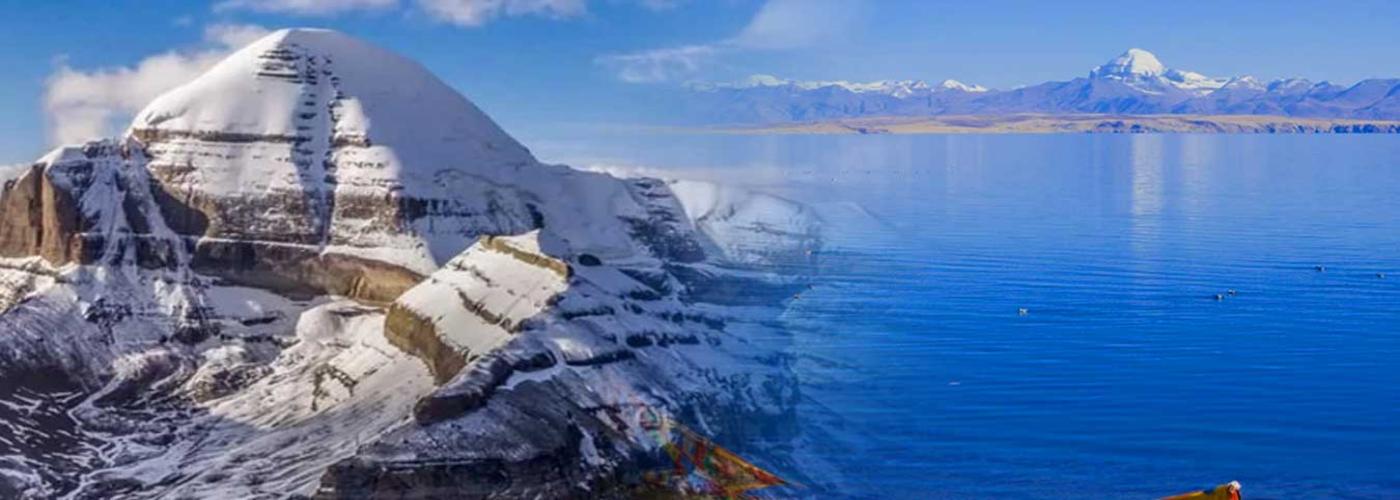
Mount Kailash and Mansarovar Lake
Holy Mount Kailash and Lake Mansarovar: An Introduction
Mount Kailash and Lake Mansarovar are two of the most revered and spiritually significant sites in the world, particularly in Hinduism, Buddhism, Jainism, and Bon, ancient traditions originating from Tibet.
1. Mount Kailash:
- Location: Mount Kailash is located in the western part of Tibet, in the Kailash Range of the Himalayas, near the border between Nepal and China. It stands at an elevation of 6,638 meters (21,778 feet), making it one of the most isolated and challenging peaks in the world to reach.
- Religious Significance:
- Hinduism: In Hindu belief, Mount Kailash is regarded as the abode of Lord Shiva, one of the most important deities in the Hindu pantheon. It is believed that Shiva resides at the summit in a state of meditation with his consort Parvati.
- Buddhism: In Tibetan Buddhism, Kailash is considered the sacred mountain of the Buddha Demchok, a deity who represents supreme bliss and spiritual strength.
- Jainism: The mountain is also revered in Jainism as the site where Lord Rishabhadeva, the first Jain Tirthankara, attained nirvana.
- Bon: Followers of the Bon religion, which is indigenous to Tibet, regard Mount Kailash as the home of their founder, ShenrabMiwoche, and the center of the universe.
- Pilgrimage: It is considered the holiest mountain in the world, and a pilgrimage to Mount Kailash is believed to cleanse a person of sins and bring spiritual enlightenment. Pilgrims traditionally complete a circumambulation (parikrama) around the mountain, which is about 52 kilometers (32 miles) in length, and can take several days to complete.
- Mysticism and Legends: The mountain's pyramid-like shape and the surrounding region have been shrouded in mysticism and legend. Some believe that the mountain is the spiritual axis of the Earth and the center of the cosmos.
2. Lake Mansarovar:
- Location: Lake Mansarovar lies near the base of Mount Kailash, approximately 20 kilometers (12 miles) to the southeast. It is situated at an altitude of about 4,590 meters (15,060 feet), making it one of the highest freshwater lakes in the world.
- Religious Significance:
- Hinduism: In Hindu tradition, Lake Mansarovar is believed to be a sacred lake, created by Lord Brahma. It is associated with the purification of the soul and the fulfillment of wishes. Pilgrims often take a holy dip in the lake to wash away their sins.
- Buddhism: For Buddhists, the lake symbolizes the perfection of the body, speech, and mind, and is believed to possess great spiritual energy.
- Jainism: In Jainism, the lake is also sacred, associated with the Tirthankaras and their path to liberation.
- Bon: The Bon religion also holds the lake in high regard, considering it a divine place of power.
- Sacred Water: The water of Lake Mansarovar is considered exceptionally pure and is believed to have healing properties. Many pilgrims drink its water as part of their spiritual journey.
- The Mansarovar Circuit: Pilgrims visit Lake Mansarovar as part of the Kailash pilgrimage, often taking a ritual bath and performing prayers to seek blessings and spiritual salvation. The lake's serene beauty and tranquil environment contribute to its aura of holiness.
3. Connection Between Kailash and Mansarovar:
The proximity of Lake Mansarovar and Mount Kailash creates a powerful spiritual synergy. Together, they form an inseparable part of the pilgrimage route. The journey to these sacred sites is seen as both a physical and spiritual quest, with both natural features embodying divine principles. It is believed that completing the circumambulation of Mount Kailash and taking a dip in Lake Mansarovar can result in liberation (moksha) and spiritual transformation.
Conclusion:
Mount Kailash and Lake Mansarovar are not only significant religious landmarks but also symbols of spiritual aspiration for millions of people around the world. They represent the intersection of nature, mythology, and human devotion. Every year, thousands of pilgrims from various traditions undertake arduous journeys to these holy sites, seeking purification, enlightenment, and the ultimate union with the divine.