
Music & Mountains: Folk Traditions You’ll Hear While Trekking in Nepal
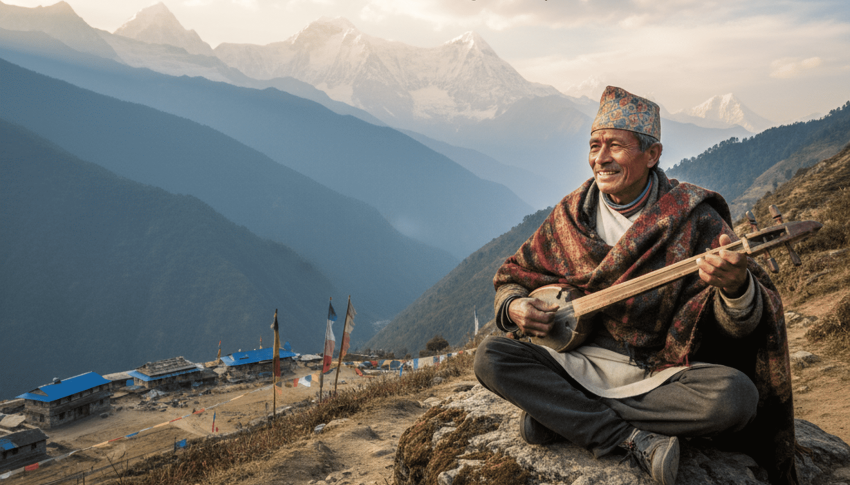
Music & Mountains: Folk Traditions You’ll Hear While Trekking in Nepal
When people think of trekking in Nepal, they often picture snow-capped peaks, fluttering prayer flags, and winding trails. But there’s another side of Nepal that many travelers don’t expect to encounter — its rich folk music and cultural traditions. Along your journey through the Himalayas, you’re not only walking past stunning landscapes but also stepping into a living world of songs, rhythms, and instruments that tell stories of history, spirituality, and community.
In this blog, we’ll explore the folk traditions and music you might experience while trekking in Nepal.
The Role of Music in Nepalese Culture
Music in Nepal is not just entertainment — it is a way of life. From religious ceremonies to seasonal festivals, from mountain villages to bustling Kathmandu streets, music connects people to their roots and keeps traditions alive. During treks, you may hear villagers singing folk songs, see local instruments being played, or even join in with a dance around a fire after a long day’s hike.
Folk Music You’ll Hear in the Himalayas
1. Dohori Songs – The Singing Dialogue
Dohori is a popular folk tradition where two groups (often men vs. women) sing in a lyrical “question-answer” style. You may hear dohori in tea houses or during village gatherings while trekking. The playful banter, wit, and humor make it a delightful experience.
2. Deuda & Tamang Selo
- Deuda songs are common in the western hills of Nepal, often performed during festivals with a circle dance.
- Tamang Selo, also called "Damphu Selo," is accompanied by a traditional drum called Damphu, widely sung by the Tamang community you’ll meet in trekking regions like Langtang. Its lively beats will instantly lift your spirits after a tiring hike.
3. Gurung & Magar Folk Tunes
While trekking in Annapurna or Ghorepani, you’ll likely hear the Rodhi Ghar tradition of the Gurung people — gatherings with songs, dances, and laughter. Similarly, Magar folk dances like Kauda bring trekking villages to life.
4. Bhajan & Devotional Music
In regions around temples, monasteries, or sacred lakes, you may encounter bhajans (devotional songs) or Tibetan chants. The sound of drums, bells, and long horns creates a spiritual atmosphere that blends beautifully with the Himalayan landscape.
Traditional Instruments You Might See
- Madal – A hand drum, often used to keep rhythm in Nepali folk songs.
- Sarangi – A four-stringed instrument, traditionally played by Gandharva (travelling musicians). Its soulful sound will leave you mesmerized.
- Damphu – The round drum of the Tamang people.
- Bansuri – A bamboo flute, producing melodies that echo across mountain valleys.
Music and Trekking: A Cultural Experience
Trekking in Nepal isn’t just about reaching a destination; it’s about immersing yourself in local traditions. Sitting in a small mountain teahouse, listening to villagers sing around a fire, or joining a circle dance gives you memories as unforgettable as the mountain views. This cultural exchange adds depth to your Himalayan adventure.
Final Thoughts
If you’re planning a trek in Nepal, prepare not only for breathtaking landscapes but also for folk music and traditions that will touch your heart. These moments of cultural connection often become highlights of the journey, reminding you that the Himalayas are alive with stories, rhythms, and songs.